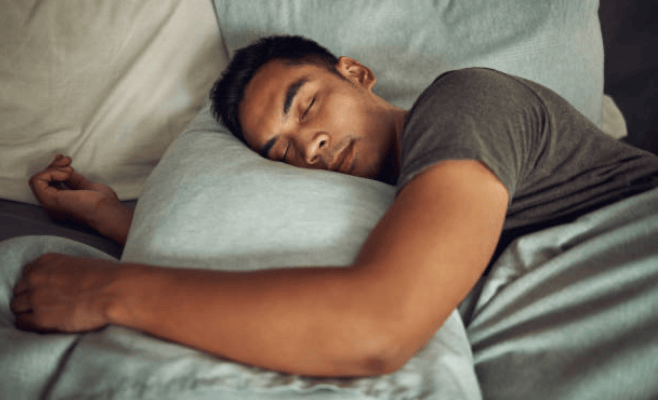
Sleep.
Maybe one of my favorite hobbies.
I hate to perpetuate the stereotype, but as I get older I tend to enjoy a good night’s sleep. And a midday nap isn’t a requirement, but it’s a welcome “timeout” to my day’s activities. Though, when I was working in corporate America, a request came to the management team to obtain “nap- pods”, little cocoon-like deals where you could lay down, curl up and take a nap.
In your office. During the day. Right out in the open. Not even putting your head down own your desk, with one eye open in case the boss came by. And no, the request was politely declined. Even in California in the teens, we weren’t quite that progressive…
…but I digress…
So, to get back to the subject at hand, is good sleep more than just a pleasant pastime?
You bet your feather down pillow it is…
A good night’s sleep makes you feel energized and alert the next day. And being energized and alert not only feels great but increases your chances for another good night’s sleep. When you wake up feeling refreshed, you can use that energy to get work done, and have an active, productive day. You’ll sleep better the next night and increase your daily energy level. Kind of a healthy, cyclical thing.
Researchers have also found that people who sleep fewer than 7 hours per night are more likely to be overweight or obese. It is thought that a lack of sleep impacts the balance of hormones in the body that affect appetite. The hormones ghrelin and leptin, which regulate appetite, have been found to be disrupted by lack of sleep. So when you are planning your weight control scheme, make sure you include sleep in that plan. “Ongoing research shows a lack of sleep can produce diabetic-like conditions in otherwise healthy people,” says Dr. Merrill Mitler, a sleep expert and neuroscientist at NIH (Nat’l Institiute of Health). When you’re tired, you can’t function at your best. Sleep helps you think more clearly, have quicker reflexes and focus better. “The fact is, when we look at well-rested people, they’re operating at a different level than people trying to get by on 1 or 2 hours less nightly sleep,” says Mitler
Sleep is a time to relax, but it’s also a time during which the body is hard at work repairing damage caused by stress, ultraviolet rays, and other harmful exposure. Your cells produce more protein while you are sleeping. These protein molecules form the building blocks for cells, allowing them to repair damage incurred by our day to day living. “Sleep affects almost every tissue in our bodies,” says Dr. Michael Twery, a sleep expert at NIH. “It affects growth and stress hormones, our immune system, appetite, breathing, blood pressure and cardiovascular health.” Recent studies also reveal that sleep can even affect the efficiency of vaccinations, (for those of us who still believe in that sort of thing.) Twery described research showing that well-rested people who received the flu vaccine developed stronger protection against the illness.
So, what is good sleep?
A good night’s sleep consists of 4 to 5 sleep cycles. Each cycle includes periods of deep sleep and rapid eye movement (REM) sleep, which is when we dream. “As the night goes on, the portion of that cycle that is in REM sleep increases. It turns out that this pattern of cycling and progression is critical to the biology of sleep,” Twery says. Although personal needs vary, on average, adults need 7 to 8 hours of sleep per night. Babies typically sleep about 16 hours a day. Young children need at least 10 hours of sleep, while teenagers need at least 9 hours. Sleep can be disrupted by many things. Stimulants like caffeine or certain medications can keep you up. Distractions such as electronics—especially the light from TVs, cell phones, tablets and e-readers—can prevent you from falling asleep.
Cell phones. Tell me about it.
People with insomnia have trouble falling or staying asleep. Anxiety about falling asleep often makes the condition worse. Most of us have occasional insomnia. But chronic insomnia—lasting at least 3 nights per week for more than a month—can trigger serious daytime problems such as exhaustion, irritability and difficulty concentrating.
Common remedies include relaxation and deep-breathing techniques. Sometimes medicine is prescribed. But consult a doctor before trying even over-the-counter sleep pills, as they may leave you feeling unrefreshed in the morning. Personally, books help me. When the paperback I’m reading falls from my hand and hits me in the face, it’s time to turn out the light and call it a day.
So, in general, good sleep would be a great aspect of your overall wellness to pay attention to. Develop good healthy sleep habits, get the quality sleep that will benefit you in all of the aforementioned ways, and maybe you won’t need to curl up in the office in something that looks like it belongs in one of the “Alien” movies.
Talk soon,
Bob

